
Industry
Healthcare software is built on trusted handoffs
Patient access, care delivery, administration, and connected systems all depend on that information staying clear enough to use, review, and support.
Who this software is built for
Healthcare software serves multiple teams at once. Patients, care teams, operations, IT, and compliance all rely on the same system, but they judge it by different needs and risks.

Hospitals and healthsystems
Medical groups

Home care providers

Senior living and long-term care providers

Medical laboratories

Health insurancecompanies

Healthtech startups

Healthcare softwarecompanies

Mental healthproviders

Pharmaceutical and biotech companies

Fitness and wellness companies

Veterinary clinics andhospitals
Core system pressures
Most healthcare products sits inside a larger system of workflows, data, access, and integrations.

Supporting work across teams
The same process may involve patients, care teams, operations, IT, and compliance.

Moving data without losing trust
Records, status, forms, and updates need to stay consistent across connected systems.

Managing access to sensitive information
Access needs to match each role, with important actions clear enough to review.

Balancing automation with human review
Automation can reduce manual work only when ownership, exceptions, and review paths are clear.
Trust, data, and compliance
Compliance requirements show up in the product itself: access rules, audit trails, data flows, integrations, hosting assumptions, documentation, and support responsibilities.
Clear data flows
where patient and sensitive information is collected, stored, shared, and updated
Controlled access
who can view, change, approve, export, or administer information
Auditability
which actions are recorded and clear enough for review, support, or investigation
Review-ready documentation
architecture, data-flow maps, access assumptions, integration inventories, hosting context, dependencies, and support responsibilities
Controls that remain reviewable
access rules, logs, and workflow logic that can still be reviewed as the product changes
of physicians report a strong or elite EHR experience
Clinician EHR Experienceof EHR implementations hit the mark
EHR Implementationsof nurses report time lost to unproductive charting
Nursing Documentation ReportIntegrations and ecosystem
Healthcare products often depend on systems they do not fully control: EHR/EMR platforms, scheduling tools, billing and revenue-cycle systems, labs, patient communication tools, reporting systems, and internal operations software.
A connection is only useful when the data remains clear enough for the people and teams depending on it.
 EHR/EMR systems
 - Scheduling and intake tools
- Billing and revenue-cycle systems
- Labs, pharmacies, and external providers
- Patient communication tools
- Reporting and internal operations systems
At the same time, not every workflow happens inside one system. Calls, messages, manual reviews, spreadsheets, and external portals often remain part of the operating environment.
Strong healthcare software acknowledges that reality and supports it instead of pretending everything can be fully centralized.
Build software that holds up in daily operations
Planning healthcare software that has to work across teams, data, and existing systems?

Product lifecycle complexity

Integrations need operational ownership
EHR, payer, lab, billing, scheduling, and communication connections need ongoing attention as data, access, and vendors change.

Workflow fit keeps changing
Once real teams use the system, new exceptions, handoffs, training gaps, and support needs start to appear.

Security is continuous
Every update, dependency, user role, and support decision can affect access, auditability, or data protection.

Regulatory drift after launch
Standards, certification expectations, and review requirements continue to affect the product after it is already in use.
Where these systems tend to fail
Problems usually appear after the system reaches daily work: documentation takes time away from care, context is hard to find when decisions are being made, data needs manual checking, integrations create exceptions, and teams move work into side channels.

Documentation pulls time from care
Clinicians and staff repeat information across forms, notes, systems, and reports instead of reducing the work around the patient workflow.

Care context is hard to find
Status, history, tasks, instructions, or follow-up details may be missing when care teams, admin teams, or support teams need them.
DAILY WORK REALITY
Manual checking becomes the safety net
Missing, outdated, duplicate, or inconsistent data can affect care coordination, billing, reporting, eligibility checks, or follow‑up.

Integration exceptions become operational work
Data may move between systems, but errors, delays, missing fields, or unclear status still create queues, support tickets, and manual follow‑up.

Workarounds move outside the product
When the workflow is too rigid, unclear, or incomplete, teams fall back to spreadsheets, inboxes, calls, external portals, or side processes.
Role of a technical partner
Technical partner helps the system hold up in daily operations. The goal is a product that teams can use, trust, review, and support after launch.

Map the workflow behind the request
Clarify roles, handoffs, exceptions, approvals, documentation burden, and support paths before they become hidden scope.

Design around connected systems
Plan how data moves between EHR, payer, lab, billing, scheduling, communication, reporting, and internal systems — including where errors or delays need to be visible.

Build for access and review
Structure permissions, audit trails, data-flow clarity, hosting assumptions, and documentation so security and compliance review is easier to support.

Plan for real support needs
Define how issues, updates, integration changes, and workflow adjustments will be handled once the product is in use.
Operating conditions
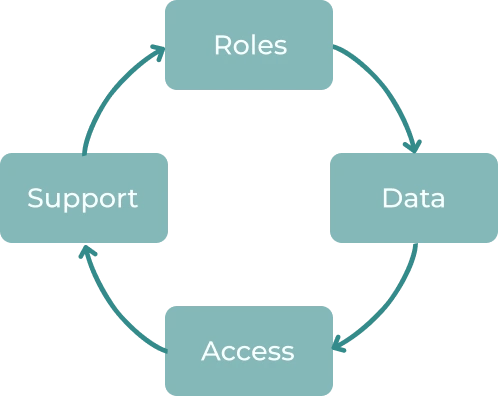
When the system holds
 Clinical, operations, IT, compliance, and support teams know where work moves, who owns it, and how exceptions are handled.
- Patient records, status, forms, and updates stay consistent across the systems that care, operations, and reporting depend on.
- Role-based access, audit trails, and data-flow documentation stay clear enough for security, procurement, and compliance review.
- Integration issues, workflow exceptions, and support needs are monitored, routed, and owned.
When problems appear
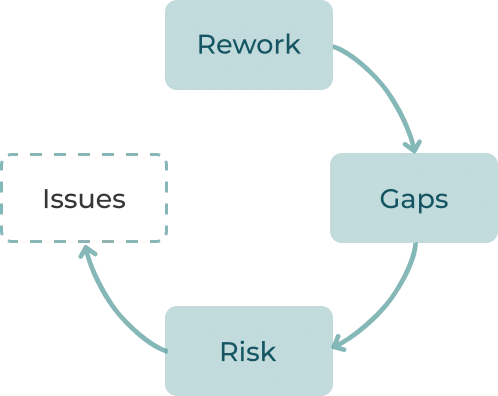
- Care, admin, or support workflows change, but the product does not reflect the new steps, handoffs, required fields, or exceptions.
- Required information is missing, duplicated, or captured in the wrong place, so teams have to check and reconcile it manually.
- Integrations keep running, but errors, delays, missing fields, or mapping changes are not visible enough to resolve quickly.
- Access rules no longer match real responsibilities, making permissions too broad, too limited, or hard to justify during review.
Real feedback. Real cases.
FAQ
Schedule a consultation with our team
Choose a time that works for you
Schedule with Galina

Prefer to share details first?
Our team will review your request and follow up to schedule a call.
SmithySoft was not just a typical executor but more like an IT partner and they satisfied the client's expectations. The developers worked together with the client's team and were very satisfied with the workflow and communication.