 Set as preferred source


McKinsey Quarterly Q2 2026 is framed around courageous leadership, but its deeper strategic message is about something else: organizational capacity.
Not capacity in the narrow sense of factories, data centers, or labor supply, but an organization’s ability to absorb complexity, redeploy capital, redesign work, govern new technologies, and move quickly enough to protect its position.
That distinction matters because the current cycle is not simply another wave of digital transformation. The tools are widely available. AI models, automation platforms, cloud infrastructure, and software engineering capabilities are no longer rare. What remains scarce is the institutional ability to turn them into measurable operational advantage.
McKinsey’s data highlights that gap. Fewer than 40% of companies have seen measurable gains from AI, despite 90% reporting investment in the technology. At the same time, AI-powered automation could unlock $2.9 trillion in economic value in the United States by 2030.
The contradiction is the point. The value is not missing because the technology is weak. It is missing because many organizations are still applying AI to isolated tasks instead of redesigning the systems that create value.
That is the report’s first major signal: the AI race is becoming less about adoption and more about operational architecture.
AI is moving from tools to workflows
The most useful AI distinction in the report is between task automation and workflow redesign.
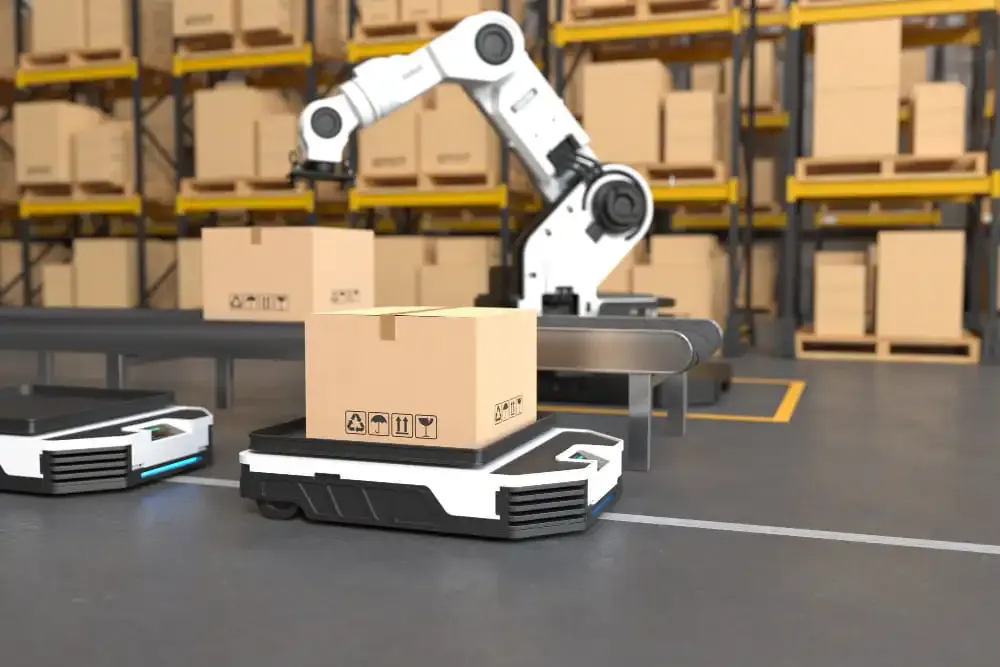
Adding a chatbot to an existing process may save time, but it rarely changes the economics of the business. A redesigned workflow—in which people, agents, and robots each perform the work best suited to them—can improve cost, speed, quality, and customer experience at the same time.
McKinsey’s examples show the difference. A global B2B technology company used agents to reshape lead generation and qualification, with projected annual revenue gains of 7% to 12% and time savings of 30% to 50% across sales roles. A utility deployed conversational AI across its support operations, with agents handling roughly 40% of calls and resolving more than 80% of those without human involvement. In life sciences, an AI platform reduced the human time required to draft clinical-study reports by nearly 60% and cut errors by roughly 50%.
These are not examples of AI simply serving as a productivity tool. They show AI functioning as a workflow-redesign layer.
The deeper implication is that AI maturity is increasingly a process issue. When core workflows remain unchanged, AI produces isolated efficiency gains. When workflows are rebuilt around agents, human judgment, data flows, and controls, AI begins to reshape business economics.
This also helps explain why McKinsey finds that roughly 60% of potential productivity gains are concentrated in sector-specific workflows. The most valuable opportunities are not generic. They lie within the operating logic of individual industries: clinical documentation in life sciences, compliance and risk in finance, supply-chain management in manufacturing, customer operations in utilities, and code modernization in banking.
The value pool is large, but it is not evenly distributed. It will accrue to organizations that understand where their greatest sources of economic leverage lie.
Architecture is becoming a financial variable
One of the report’s most important signals is easy to overlook: technical architecture is now part of financial strategy.
McKinsey’s AI transformation manifesto argues that platforms determine execution speed, unit costs, reuse, data accessibility, and the responsible scaling of AI. That makes architecture more than an IT concern. It helps determine the organization’s metabolic rate.
Fragmented architecture slows the conversion of investment into value. Every new use case requires custom integration. Data remains difficult to find, clean, and reuse. Controls are added after deployment. Teams spend more time working around constraints than building repeatable capabilities.
A stronger platform architecture does the opposite. It lowers the marginal cost of new initiatives. It allows AI models and data products to be reused across markets and functions. It gives teams a safer environment in which to experiment. It reduces the distance between insight and action.
This is why architecture is becoming a P&L responsibility. Not because every executive needs to become a technical expert, but because architecture increasingly determines whether investment becomes operating leverage or permanent complexity.
The same logic applies to talent. McKinsey’s “30–70” rule gives the operating model a concrete benchmark: more than 70% of technology talent should be in-house, more than 70% of that talent should work in hands-on engineering roles, and more than 70% should perform at competent or expert levels.
That is a clear signal. Transformation cannot be fully outsourced when technology becomes the operating system of the business. External partners will still matter, but ownership of architecture, data, workflows, constraints, and quality control must remain close to the business.
The future organization is not necessarily larger. It is denser: fewer handoffs, a higher concentration of skills, stronger internal ownership, and clearer accountability for outcomes.
Geopolitics is rewriting the map of productive capacity
The second major theme is geographic realignment.
McKinsey’s FDI analysis shows that cross-border capital is moving toward industries that will define future economic capacity: semiconductors, data centers, EVs, batteries, advanced manufacturing, and critical resources. Since 2022, three-quarters of cross-border FDI announcements have gone to these future-shaping industries and their inputs, up from roughly half before 2020.
This is not just a technology story. It is a geopolitical capital-allocation story.
Advanced economies are investing more heavily in one another, particularly in the United States. At the same time, announced flows from advanced economies into China have declined by nearly 70% since 2022 compared with the pre-pandemic baseline. Security concerns, tariffs, industrial policy, export controls, and supply-chain resilience are reshaping where new productive capacity is built.
The semiconductor industry illustrates this shift. Leading-edge capacity has long been concentrated in Taiwan and South Korea. New FDI could expand capacity outside those hubs, with the United States positioned to become a more significant producer by the early 2030s.
But diversification does not eliminate dependence. Equipment, chemicals, packaging, testing, talent, and energy remain part of the same interconnected system of constraints.
The result is not deglobalization. It is selective globalization. Capital still moves across borders, but increasingly along corridors shaped by strategic alignment.
That matters for every sector, not only advanced manufacturing. Data centers need power. EVs need batteries and minerals. AI needs chips, cooling, grid capacity, fiber, and permits. Industrial resilience now depends on physical, digital, and regulatory infrastructure evolving together.
Infrastructure is the bottleneck beneath the strategy
McKinsey projects $106 trillion in infrastructure investment through 2040. The composition of that investment is as important as its size.
Transportation remains the largest category, but the definition of infrastructure has expanded. Power grids, data centers, fiber networks, EV charging, water systems, social infrastructure, and aerospace and defense capacity now sit within the same strategic frame.
Infrastructure is no longer just the foundation of economic growth. It is becoming the primary constraint on AI, electrification, logistics, industrial policy, and national resilience.
The geographic distribution is uneven. Asia accounts for an estimated $70 trillion in projected infrastructure investment, compared with $16 trillion in the Americas and $13 trillion in Europe. That distribution signals where urbanization, industrial expansion, energy demand, and digital capacity are likely to concentrate.
For businesses, the bottleneck is practical. AI road maps assume access to computing capacity. Computing capacity depends on data centers. Data centers require power, cooling, land, permits, and grid access. EV adoption depends on charging networks and grid reinforcement. Supply-chain resilience depends on ports, railways, roads, warehousing, and reliable energy.
The next phase of digital strategy will be limited by physical systems more often than by digital ambition.
Fiscal pressure is becoming a developed-market risk
One of the report’s most valuable macroeconomic insights comes from Jane Fraser’s interview. She describes developed markets as beginning to carry “emerging-market-like” risks, particularly through fiscal dominance and the growing entanglement of monetary and fiscal policy.
That observation matters because many strategic models still treat developed-market stability as a baseline assumption. The report suggests that this assumption is weakening.
Higher public debt, policy constraints, persistent affordability pressure, and dissatisfaction with quality of life can reshape consumer behavior, political outcomes, and regulatory priorities. Housing costs, living costs, and weaker affordability are not only social issues. They affect demand resilience, labor expectations, pricing power, and the likelihood of policy intervention.
This risk develops more slowly than tariffs or cyberattacks, but it may prove more durable. If affordability becomes a structural constraint, businesses will face a more fragmented demand environment. Premiumization, discounting, wage pressure, and political scrutiny may all intensify at the same time.
In this context, resilience is not limited to supply-chain redundancy. It also requires managing exposure across consumers, governments, capital costs, and policy volatility.
Brands must become machine-readable
The report’s discussion of agentic commerce highlights another important commercial shift: visibility is changing.
As AI agents begin to compare, filter, recommend, and transact on behalf of consumers, brands will need to be legible to machines as well as humans. That does not mean brand identity becomes irrelevant. It means brand identity alone will no longer be enough.
Agents require structured product data, metadata, APIs, eligibility rules, clear inventory information, delivery constraints, return policies, loyalty logic, and verifiable claims.
In a traditional customer journey, a brand can rely on emotion, recognition, creative language, and visual differentiation. In an agent-mediated journey, those signals must also be translated into structured information that can be discovered, compared, and trusted.
McKinsey estimates that agentic AI could mediate $3 trillion to $5 trillion in global consumer commerce by 2030. Even if adoption varies by category, the strategic point is already clear: a brand can remain attractive to people while becoming invisible to machines.
This will matter first in low-regret categories, where agents can optimize around price, availability, delivery, and convenience. Over time, it will extend into higher-consideration categories as agents support research, comparison, configuration, and post-purchase service.
The marketing function of the next cycle will not only create demand. It will structure information so that demand can find the product.
AI is moving into the physical world
Another underappreciated trend is the emergence of world models.
Most AI discussions still center on language models. McKinsey points toward a different frontier: models that can simulate cause and effect in the physical world.
These systems matter because large parts of the economy are physical, not textual. Robotics, autonomous vehicles, industrial machinery, materials science, chemicals, and life sciences all require models that understand spatial relationships, physical constraints, and real-world consequences.
The implications for research and development are significant. McKinsey notes that related AI techniques could help double the pace of R&D in fields such as life sciences and chemicals. That shifts AI from generating content to accelerating discovery.
The differentiators in this field will also look different. Proprietary data, laboratory validation, simulation quality, domain expertise, and regulatory confidence will matter more than prompt fluency. The organizations best positioned to benefit will be those that connect scientific knowledge, data infrastructure, and operating discipline.
This is where AI begins to move beyond knowledge work and into physical innovation.
Competitive advantage is becoming less durable
McKinsey’s analysis of competitive advantage provides the strategic backbone of the issue.
The firm’s “shuffle rate” analysis shows that changes in market positions have accelerated in more than 60% of industries over the past decade, with an 11% increase in median rates. Put simply, the rankings of winners and laggards are becoming less stable.
Yet internal measurement systems are not keeping up. Only 10% of surveyed respondents track the drivers of market-share gains and profitability at the market level. Only 9% report full alignment on what their competitive advantage actually is.
That gap is dangerous. Most organizations believe they understand why customers choose them. Far fewer can demonstrate it with market-level data.
The report makes a simple point: competitive advantage is not an enterprise slogan. It exists at the intersection of offering, geography, customer segment, competitor set, and operating model.
Scale may be decisive in one market and irrelevant in another. Talent may be a differentiator in one sector and only a minimum requirement elsewhere. Brand may command a premium until distribution, search, or agentic commerce changes the basis of comparison.
Advantage is becoming more granular. Strategy has to become just as granular.
Dissent becomes an operating capability
The report’s leadership theme could easily be dismissed as “soft.” It is not.
McKinsey’s “obligation to dissent” reframes disagreement as a duty to the enterprise rather than a personality trait. That is strategically important in a period when capital is being redeployed, AI is changing workflows, fiscal risks are rising, and competitive advantage is eroding faster than many companies can measure.
The question is not whether people are willing to speak up in theory. It is whether the organization has mechanisms that legitimize minority views before decisions become fixed.
Dissent exposes blind spots. It prevents weak consensus from taking hold. It improves the quality of capital allocation.
The related concept of “time to repair” is equally useful. Unresolved tensions slow execution. They create hidden friction in decision-making, collaboration, and accountability. Measuring how quickly tensions are surfaced and resolved turns trust into an operational metric.
This connects directly to transformation performance. McKinsey notes that transformations are 5.3 times more likely to succeed when leaders model the required behavioral changes. The broader message is that culture becomes material when it affects the speed and quality of decisions.
Courage, in this context, is not merely a personal virtue. It is an institutional capability to surface reality early.
The practical risk set
The report points to a set of interconnected risks that are already visible in capital plans, technology programs, and operating models.
AI value dilution is the most immediate risk. Task-level automation can consume budget and attention without changing the economics of core workflows.
Architecture drag is the hidden constraint. Fragmented platforms and weak data reuse increase unit costs and slow every new initiative.
Talent-density gaps limit transformation capacity. Without internal ownership of engineering, data, architecture, and AI systems, organizations struggle to move beyond pilots.
Geographic concentration remains a material risk. Semiconductors, batteries, data centers, critical minerals, and energy systems remain exposed to geopolitical corridors even as investment becomes more diversified.
Fiscal pressure in developed markets can weaken demand resilience and increase policy volatility.
Agentic invisibility is an emerging commercial risk. Brands and products that are not machine-readable may lose visibility as agents mediate more purchasing decisions.
Trust failures in autonomous systems can turn technical errors into regulatory, reputational, and operational problems.
Infrastructure bottlenecks can slow AI, electrification, logistics, and industrial expansion even when capital and demand are available.
Strategic implications
The report’s strongest message is that advantage is moving from adoption to orchestration.
AI will not reward organizations simply for using it. It will reward those that redesign workflows around it, build the internal talent needed to own it, and create architectures that allow it to scale safely and economically.
Geopolitics is no longer separate from business strategy. It will shape where capacity is built, where capital flows, and where supply chains remain viable.
Infrastructure will become a strategic constraint rather than a background assumption. Power, data centers, grids, transportation, and permitting will increasingly determine the speed of digital and industrial ambition.
Brand strategy will become more technical without becoming less human. The next commercial interface will require both emotional relevance and machine-readable clarity.
Risk management will become more integrated. Fiscal pressure, AI trust, architecture, infrastructure, and competitive erosion cannot be managed as separate issues because they increasingly compound one another.
The organizations best positioned for this cycle will not be those that chase every trend. They will be those that build operating capacity: the ability to identify constraints early, reallocate capital with discipline, redesign work around new technologies, and preserve enough organizational trust to act before the market forces their hand.