 Set as preferred source


Insights from McKinsey’s State of the Consumer 2026: When tech acceleration and cost pressures collide.
The consumer story in 2026 is not simply about weaker spending or faster technology. It is about a change in who controls the purchase decision, what consumers consider valuable, and where companies can still earn pricing power. McKinsey’s data suggests that several familiar sources of advantage are becoming less reliable at the same time.
McKinsey’s State of the Consumer 2026 is built around four trends: a technology-driven path to purchase, a broader health economy, continued preference for experiences, and the rise of a more resourceful consumer. Underneath them is a more important structural change.
Consumers have more tools to compare, substitute, delay, repair, resell, and increasingly delegate purchases. At the same time, inflation, geopolitical instability, and energy-price volatility have kept cost sensitivity embedded in everyday behavior. More choice has not produced indiscriminate consumption. It has produced more selective consumption.
That distinction matters because many consumer operating models were built for a different environment: acquire traffic, convert intent, drive replacement, defend the brand premium, repeat. Each part of that sequence is now becoming harder to take for granted.
The purchase funnel is being compressed before brands can enter it
For years, digital commerce still preserved a familiar sequence. A consumer discovered a need, searched for options, visited several sites, compared products, and eventually purchased. Search was particularly valuable because it exposed consumers at the moment when intent was already high.
Generative AI begins to break that sequence.
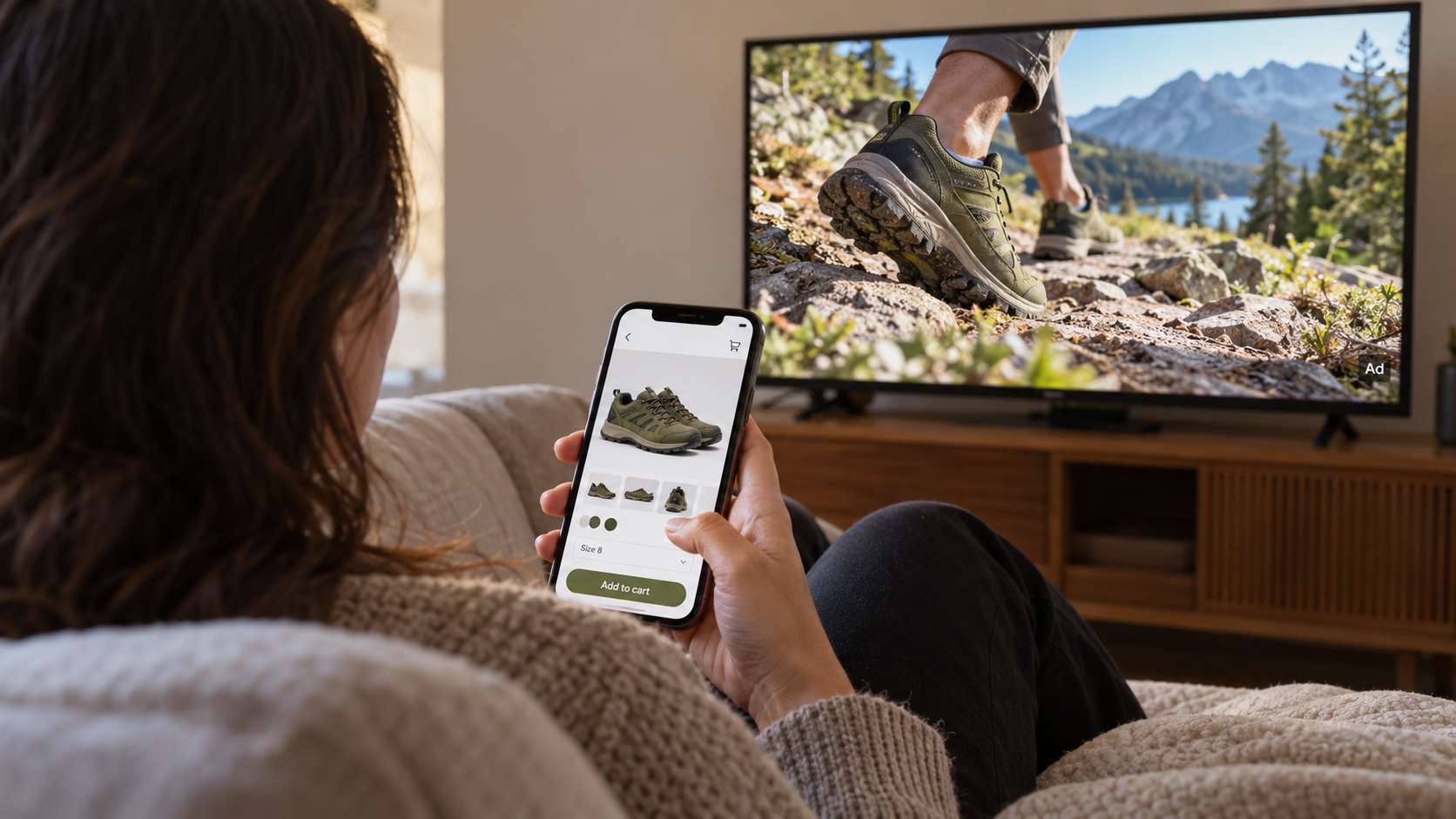
Open-web traffic has fallen 8% since 2023, even as overall search activity continues to grow. Consumers increasingly receive product explanations and comparisons directly inside AI-generated results, reducing the need to click through to brand websites, retailers, and publishers. Among Gen Z, 28% already use generative AI for shopping, while 60% regularly use AI overviews on traditional search platforms. Social media now influences the purchase evaluation of 34% of Gen Z, making it more important for that cohort than conventional search.
The strategic issue is not simply that another marketing channel has appeared. It is that the point where brands historically intercepted active demand is narrowing.
Yet influence is not the same as trust. Younger consumers increasingly use social media and generative AI while remaining skeptical of both.
If an AI interface answers the question before a consumer reaches a search result, retailer page, or brand site, the consideration set may already be partially formed. Influence moves earlier, before explicit purchase intent appears.
That also changes the economics of owned media. Across roughly 2.6 million citations generated by ChatGPT, Gemini, and Perplexity for 25 consumer-packaged-goods brands, company-owned websites represented only 1–2% of cited sources. Retailers, publishers, social platforms, competitors, reviews, and other third parties carry much of the informational weight.
This is an infrastructure shift as much as a communications shift. Product data, external validation, reviews, retailer information, and consistency across third-party sources increasingly influence whether a company is visible and accurately represented inside AI systems.
The next stage extends beyond discovery. McKinsey describes a coming “dual front door” to commerce, where purchases can begin either inside retailer AI systems or general-purpose AI platforms. Amazon, Walmart, Shopify, payments providers, and technology companies are already moving toward infrastructure that allows software agents to compare products, apply loyalty benefits, and execute transactions.
As these capabilities converge, platforms that connect discovery, data, payment, loyalty, and fulfillment could gain more influence over the consumer interface.
Cost pressure is no longer producing simple trade-down
The other major change is easy to misread.
More than three-quarters of consumers still engage in some form of trade-down behavior. But they do not respond to higher prices in the same way across categories.
For essentials, consumers generally stay inside the category and optimize: they change brands, adjust pack sizes, seek promotions, or substitute alternatives. In discretionary categories, the response can be more severe. Consumers delay the purchase or remove it altogether.
That creates two very different competitive environments.
In essentials, the battle is largely over which option wins existing demand. In discretionary goods, the competition increasingly includes non-consumption.
The deeper signal is that behaviors initially associated with inflation are becoming habits. In McKinsey's five-country survey, 82% of consumers say they use products longer before replacing them, 69% repair items instead of discarding them, and 68% actively try to reduce waste. Nearly half report doing some services themselves that they previously paid for, while 30% buy apparel secondhand.
Importantly, this is not confined to financially constrained households. McKinsey finds higher-income consumers also using budgeting tools, DIY approaches, and other optimization behaviors.
Value is therefore becoming broader than price.
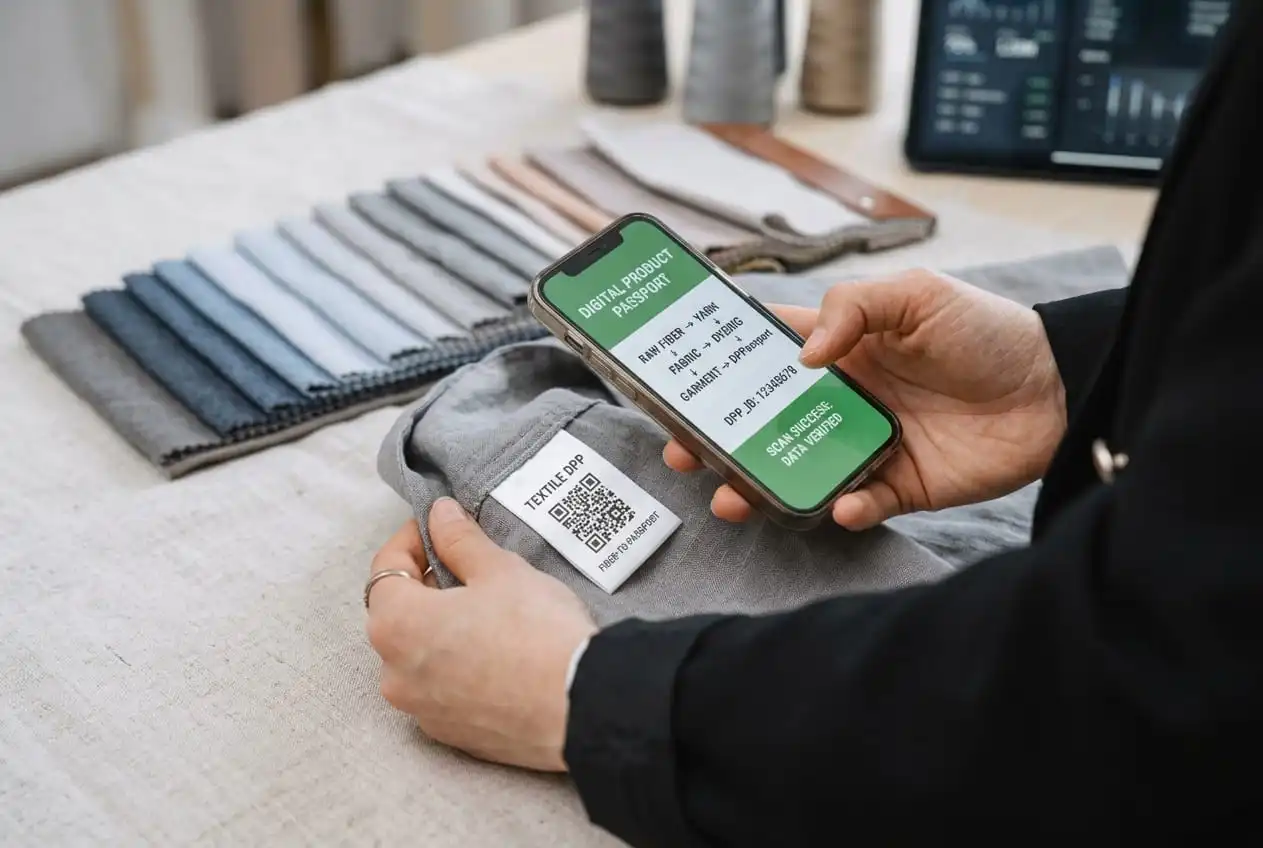
Durability, repairability, versatility, resale value, and lifetime cost increasingly sit beside the initial purchase price. This helps explain why recommerce is moving closer to the mainstream and why digital product passports, authentication, trade-in programs, and ownership-history infrastructure matter beyond regulatory compliance. A product capable of retaining secondary-market value is economically different from one designed solely around replacement.
For established consumer businesses, the pressure runs directly into product development, procurement, assortment, and supply chain. Margin resilience is becoming less dependent on the ability to raise prices and more dependent on eliminating cost without visibly reducing utility.
Health is becoming measurable demand
Health adds another layer because technology is changing what consumers can observe about themselves.
Wearables, glucose monitors, fitness trackers, and AI tools increasingly turn sleep, heart health, nutrition, stress, and metabolic performance into measurable feedback. Among the consumers referenced in McKinsey’s food and beverage research, 75% of Gen Z and 73% of millennials use health-related digital tools, compared with 32% of baby boomers. Meanwhile, 22% of consumers use large language models for health and wellness topics.
This pushes the wellness market away from broad aspiration and toward outcomes. Yet the gap between intent and results remains wide: across all five countries in McKinsey's main consumer survey, fewer than half of respondents said they were mostly or definitely achieving their wellness goals.
McKinsey’s segmentation makes the economics clearer. Its most intensive group, “maximalist optimizers,” represents about 25% of wellness consumers but more than 40% of market spending. Demand is large, but commercially attractive demand is disproportionately concentrated among consumers willing to experiment with products, technologies, and science-backed interventions.
GLP-1 drugs show how quickly those interventions can spill into other categories. Roughly one in six US households had a member who had tried GLP-1 medication as of July 2024. Grocery spending among adopting households fell about 6% within six months. Yet 34% of users stopped treatment within six months, and spending returned, on average, toward pre-adoption levels after discontinuation. That complicates long-term demand forecasts.
The geographic divergence is equally important. European penetration is estimated at only around 2%, constrained by availability and reimbursement structures. In Brazil, McKinsey estimates a roughly $3 billion market involving about three million consumers, while patent expirations that occurred in March 2026 could bring lower-cost options to market.
The same health trend therefore produces very different category effects depending on pharmaceutical access, reimbursement policy, household purchasing power, and local regulation. Global demand may converge around similar goals while the commercial timing remains distinctly regional.
Experiences are redirecting both spending and physical capital
Cost consciousness has not eliminated discretionary spending. Consumers are becoming more selective about what deserves it.
Between 2023 and 2025, global experience spending grew 2.6%, while nonessential goods grew only 0.8%. Travel experiences expanded 4.4%. Luxury hotels grew close to 6%, versus approximately 3.5% for hotels overall. When consumers were asked how they would spend an extra $200, vacations ranked first across age groups.
This is beginning to reshape physical infrastructure as well as household budgets. In 2025, US landlords leased more commercial space to service-oriented tenants than to traditional retailers, with wellness, fitness, and experiential concepts among the fastest-growing categories.
That is a meaningful cross-sector signal. Physical space is gradually shifting from being primarily a place to hold and sell inventory toward a place that delivers services, participation, community, or experience.
But the experience economy does not automatically justify more fixed assets.
McKinsey contrasts models that effectively illustrate two capital paths. POP MART added a LABUBU-themed zone to its existing Beijing theme park in May 2026, using merchandise and fandom to reinforce a physical destination experience. Trolli takes a lighter approach, partnering within gaming and events to participate in environments that already have an audience.
The distinction is important. Experience ownership and experience participation do not require the same capital model. Partnerships can deliver access to established communities without tying up capital in standalone physical infrastructure.
The competitive advantage is moving closer to orchestration
Taken together, these shifts redraw the consumer landscape.
Large marketplaces and digitally mature retailers gain leverage because they increasingly control multiple parts of the purchase system at once. AI can strengthen that position by connecting recommendation, comparison, loyalty, payment, and fulfillment.
At the same time, brand scale alone becomes a less complete defense. AI weakens direct control over product narratives. Resourceful consumers weaken automatic replacement cycles. Recommerce challenges assumptions about ownership. Health technology makes outcomes more visible. Experiences compete with physical products for discretionary dollars.
The result is not the disappearance of brand power. It is a higher burden of proof.
Strong positioning increasingly rests on several reinforcing forms of value: products that justify their price, information that remains credible outside owned channels, operating structures capable of absorbing cost pressure, and ecosystems that preserve relevance even when another platform controls the interface.
There are several risks embedded in that transition:
- AI intermediation can reduce direct access to both demand and customer data. The platform that answers the question may increasingly determine which options are considered.
- Discretionary demand can disappear rather than simply trade down. A cheaper competitor is no longer the only risk; postponement is becoming a substitute.
- Health-driven category changes can move faster than planning cycles. GLP-1 adoption already demonstrates second-order effects across food, fitness, apparel, and wellness.
- Experience investments can become capital traps. The market rewards meaningful experiences, not physical assets by themselves.
- Geographic adoption curves are diverging. Regulation, reimbursement, technology penetration, energy costs, and purchasing power can make the same consumer trend commercially mature in one market and premature in another.
The broader implication is that consumer advantage is becoming harder to own through a single channel, asset, or capability.
Technology is making comparison easier while cost pressure is making consumers more willing to use it. Health tools are making outcomes more visible. Resale is extending the economic life of products. Experiences are redirecting both consumer spending and commercial real estate. AI platforms are inserting another layer between demand and the companies trying to capture it.
The 2026 consumer is not simply spending less.
The more important shift is that consumers are becoming better equipped to decide where spending is justified — and the infrastructure surrounding that decision is increasingly controlled by systems that individual brands do not own.